 Régys Borges da SilveiraBooks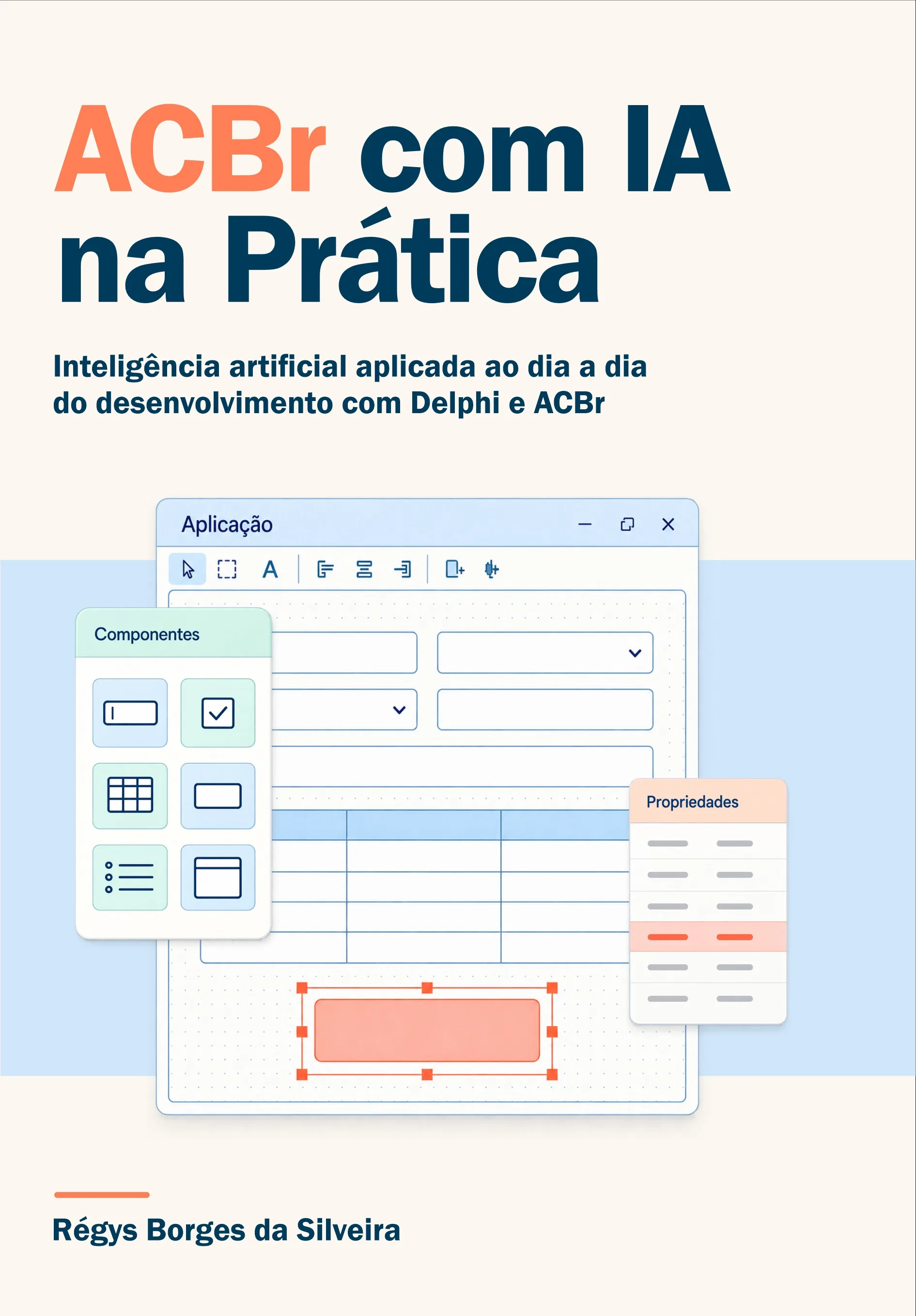
Delphi & ACBr
More productivity with Delphi and ACBr. More judgment when using AI.
ACBr with AI in Practice
Artificial intelligence applied to everyday development with Delphi and ACBr
Turn AI responses into Delphi solutions you understand, test, and maintain.
Print edition availableBuy the print bookRead on paper, ready to consult and keep close.R$ 89,88Buy on UICLAP →Buy on Kindle
Prices checked on 11/10/2026. Shipping is set by the store.
★ Review this bookThis book is currently available in Brazilian Portuguese.
About the book
A complete view of the book.
ACBr with AI in Practice shows how to incorporate artificial intelligence into everyday Delphi and ACBr component development without confusing speed with certainty. It begins with real tasks—understanding a project, locating sources, configuring components, filling documents, interpreting responses, and investigating failures—to teach productive AI use while preserving control over the code.
Across 12 chapters and four parts, the fictional Caixa Ágil project provides local simulations, a Win32 build, DUnitX tests, and fictional data. The book includes 44 prompts, a problem-oriented reference guide, and 22 skills organized by task and component family. NFC-e in the testing environment is the main focus, with criteria for preparing real integrations; ACBrMonitorPLUS and ACBrLib are outside the scope.
The challenge
Does this situation sound familiar?
AI can explain code, suggest configurations, and produce implementations in seconds—but a convincing answer may still use a nonexistent API, ignore the installed version, or propose an unsuitable fiscal workflow.
The book’s approach
Replace plausible suggestions with verifiable ACBr changes.
Learn to provide context, consult applicable sources, constrain tasks, and validate every result through compilation, tests, schemas, testing environments, and review proportional to risk.
“An AI response is raw material. The work ends when there is evidence proportional to the risk.”
By the end of the book, you will be able to:
✓Identify where AI truly saves time in ACBr development
✓Prepare Delphi project context without exposing secrets
✓Guide AI with sources, instructions, and validation criteria
✓Configure, fill, and validate fiscal documents in the testing environment
✓Diagnose rejections and failures with logs, tests, and debugging
✓Update and deliver integrations with traceability and security
Questions that guide the reading
Answers begin with the right questions.
Questions explored through context, criteria, and examples.
Which context and sources reduce suggestions that are incompatible with the project?
How should configuration, document filling, and issuance be validated before production?
How can logs and rejections become experiments that reveal the cause?
Inside the book
A structured journey that helps you move forward.
Concepts and applications presented in a coherent sequence.
AI, context, and evidence
Recognize tasks suited to AI, prepare sufficient context, and distinguish responses, sources, and evidence.
ACBr environment and architecture
Understand installation, project structure, and responsibilities in an integration that directly uses ACBr components.
Configuration and testing
Separate parameters from secrets, configure certificates, and build a safe preflight for the testing environment.
Fiscal documents and issuance
Map fictional data, validate schemas, and treat issuance, responses, XML, events, and printing as verifiable states.
Diagnosis and validation
Organize facts, hypotheses, and experiments; use compilation, DUnitX, diffs, and adversarial review to validate changes.
Maintenance and delivery
Compare versions, protect data, preserve reversibility, and bring the complete method together in a traceable project.
What makes this book different
Depth to understand. Clarity to keep moving forward.
44 prompts for real development and diagnostic tasks
The Caixa Ágil project with a Win32 build, DUnitX tests, and fictional data
22 skills organized by task and ACBr component family
Direct use of Delphi ACBr components; ACBrMonitorPLUS and ACBrLib are outside the scope
Who this book is for
Find your place in this book.
Delphi developers who use or plan to use ACBr components directly.
✓ Delphi developers who use ACBr components✓ Professionals maintaining retail and fiscal systems✓ Technical leaders seeking productivity with control✓ Teams updating or modernizing ACBr integrations
Before you begin
What you need to benefit from the book
✓Basic knowledge of Delphi, Object Pascal, and VCL projects
✓Familiarity with debugging, databases, and Git is helpful; AI expertise is not required
An informed choice
This may not be the right book if…
—Readers seeking a complete course in tax law or accounting
—Readers who want to copy AI responses into production without validation
Beyond this book
More reading. New conversations.
Explore the free guide collection and follow the books on Instagram, at your own pace.
Free guidesNo registration



One question.
A place to start reading.
123 free guides across nine pathways on rights, money, technology and public life: short reads with examples and sources to explore.
Choose a guide
Read online or download a free PDF. Guides are in Portuguese.
Books on Instagram
@livrosregysBooks by Régys


Between reads,
the ideas keep coming.
Thought-provoking excerpts, book news and a look behind what I am preparing. Discover your next idea there.
Explore the Instagram profile
@livrosregys · Opens a new tab. Posts are in Portuguese.
Book readers
Experiences from readers.
The first reviews will appear here after moderation.
Have you read it?
Share your reading experience.
After confirming your email, your review will be moderated before publication. Your email will never be displayed.
Continue the conversation
Receive resources and updates about ACBr with AI in Practice.
Sign up for content, samples, and new resources related to the book.
Choose your edition
Continue your journey with the complete book.
Artificial intelligence applied to everyday development with Delphi and ACBr
Prices checked on 11/10/2026. Shipping is set by the store.
Print edition ISBN: 978-65-02-36440-6Keep reading
Other books for your journey
Delphi & Databases
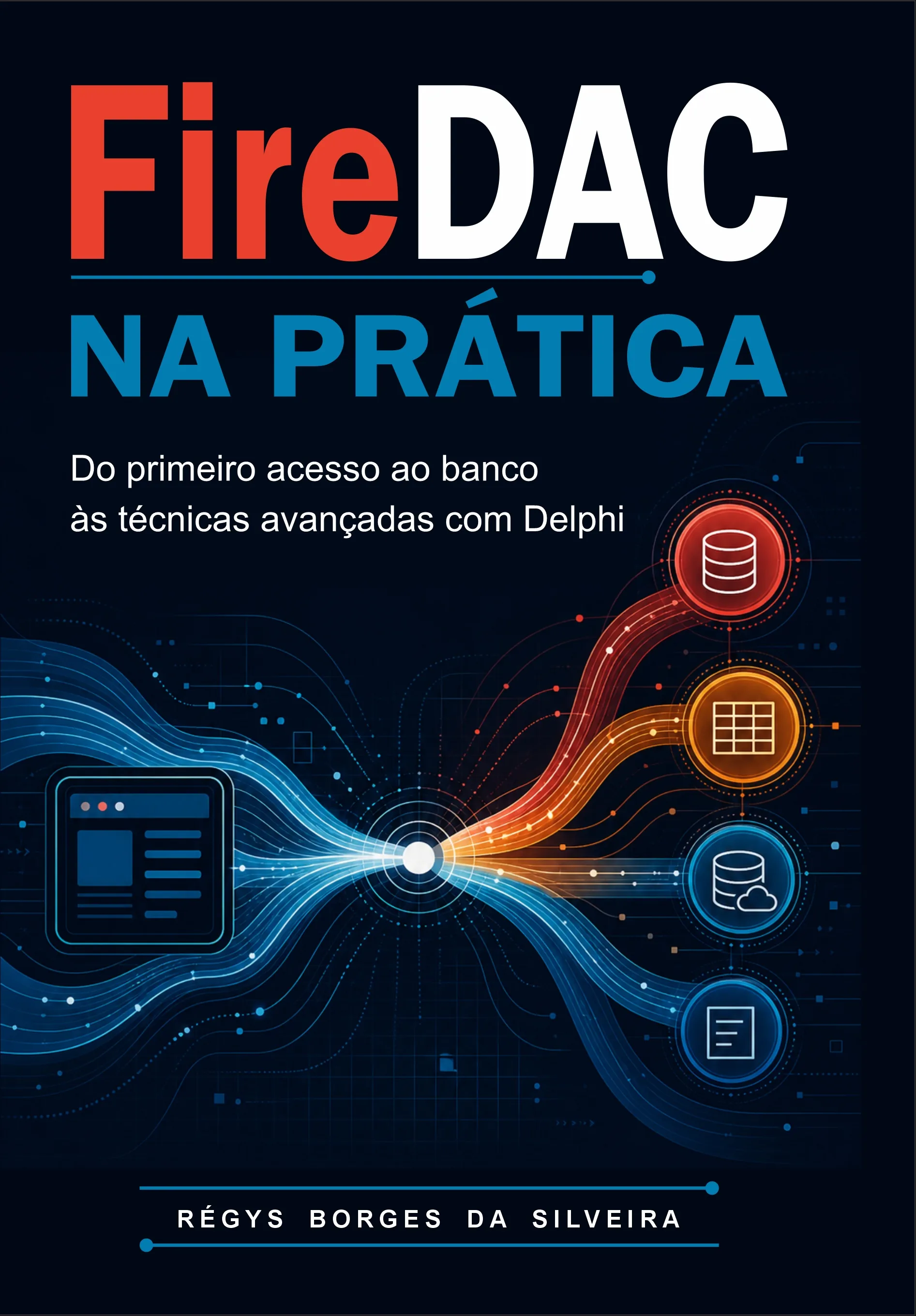
FireDAC in Practice
Move beyond the first connection and build a predictable, secure data-access layer ready for production.
Explore →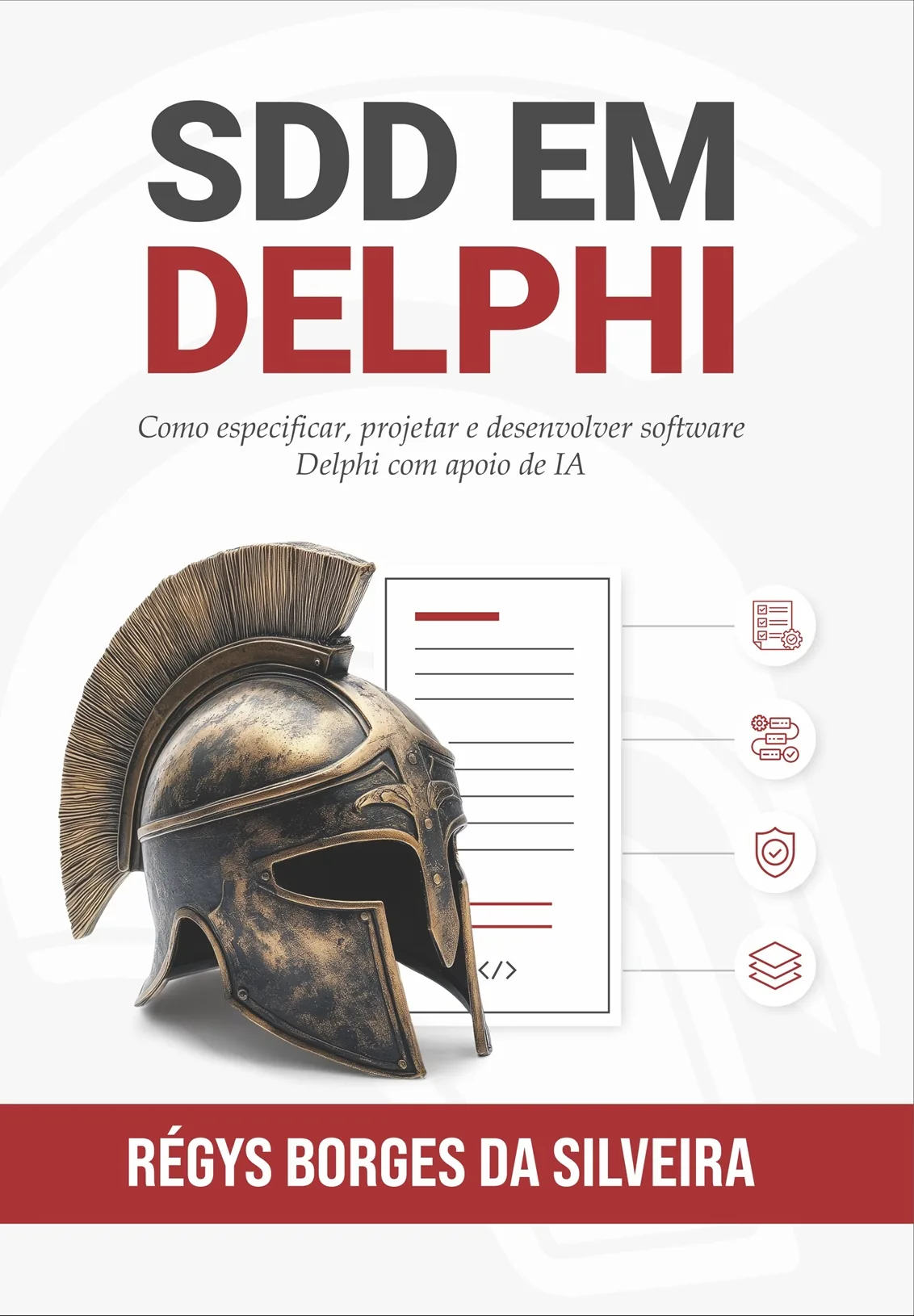
Delphi and AI
SDD in Delphi
Put specifications at the center and use AI with greater clarity, control, and technical quality.
Explore →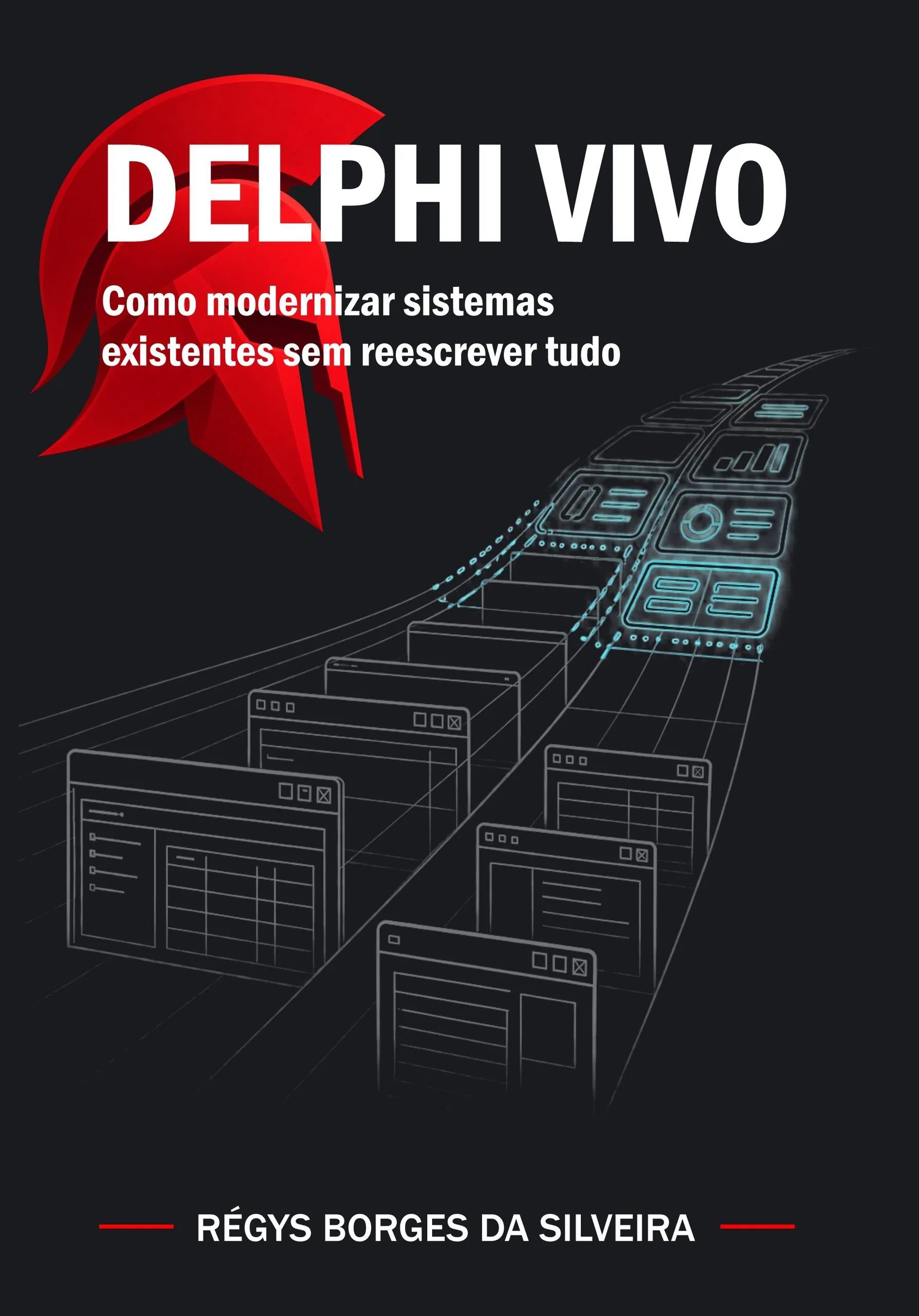
Software Engineering
Delphi Alive
Restore your ability to evolve Delphi systems through small, verifiable, and reversible changes.
Explore →