 Régys Borges da SilveiraBooks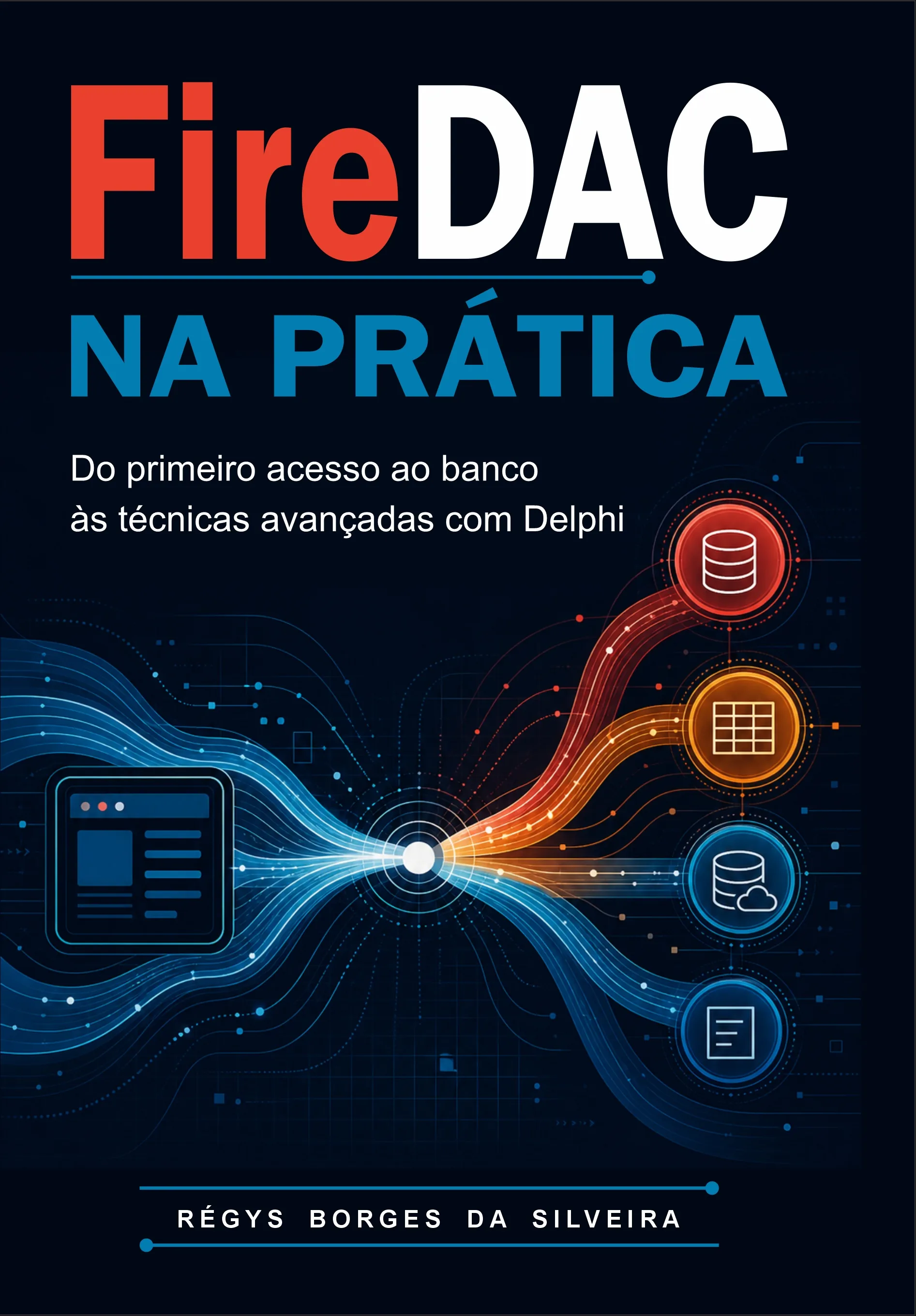
Delphi & Databases
Connecting is the beginning. Operating safely is the real work.
FireDAC in Practice
From the first database connection to advanced techniques with Delphi
Move beyond the first connection and build a predictable, secure data-access layer ready for production.
Print edition availableBuy the print bookRead on paper, ready to consult and keep close.R$ 184,87Buy on UICLAP →Buy on Kindle
Prices checked on 11/10/2026. Shipping is set by the store.
★ Review this bookThis book is currently available in Brazilian Portuguese.
About the book
A complete view of the book.
FireDAC in Practice follows the development of a data-access layer from the first connection to the decisions that sustain a production application. Rather than presenting isolated components, it shows how queries, parameters, types, transactions, and updates relate to consistency, performance, and user experience.
Across six parts, readers progress through in-memory data, Cached Updates, Local SQL, batch processing, concurrency, pooling, diagnostics, recovery, and deployment. Delphi examples with different relational databases reveal the distance between code that merely works in a laboratory and a solution capable of remaining dependable under load, failure, and continuous change.
The challenge
Does this situation sound familiar?
Making a query work is only the first step. In production, connections, transactions, concurrency, performance, failures, and database differences turn apparently simple decisions into risks for the entire system.
The book’s approach
Keep data access reliable beyond the first query.
Explore FireDAC progressively, from architecture and driver configuration to queries, transactions, in-memory data, concurrency, security, recovery, and deployment.
“The value of a data-access library appears both in what it delivers and in how the system recovers.”
By the end of the book, you will be able to:
✓Understand FireDAC architecture, drivers, and configuration
✓Write parameterized queries and handle data types correctly
✓Control transactions, master-detail relationships, and updates
✓Use in-memory data, caching, and Local SQL with clear criteria
✓Measure performance and handle concurrency and asynchronous execution
✓Prepare security, recovery, and deployment for production
Questions that guide the reading
Answers begin with the right questions.
Questions explored through context, criteria, and examples.
How do parameters, types, transactions, and updates affect correctness?
When do caching and in-memory processing help—or create risk?
How can a data layer be prepared for concurrency, failure, and deployment?
Inside the book
A structured journey that helps you move forward.
Concepts and applications presented in a coherent sequence.
Foundations and the first connection
Understand the architecture, drivers, connections, and configuration behind the first successful access.
Queries and commands
Build parameterized queries and commands while respecting types, errors, and database behavior.
Transactions and relationships
Coordinate transactions, master-detail relationships, and updates without losing consistency.
In-memory data and updates
Use FireDAC memory, cached updates, and Local SQL where they add measurable value.
Performance and concurrency
Evaluate concurrency, pooling, asynchronous work, and bottlenecks with evidence.
Security, recovery, and deployment
Protect credentials and data, recover from failure, and prepare dependable deployment.
What makes this book different
Depth to understand. Clarity to keep moving forward.
21 chapters using RAD Studio 13 Florence, Delphi 13, and Firebird 5 as the main references
The FireStore case study and complete examples in a public repository
Decision matrices, exercises, and deliberately induced failures to verify behavior
Comparisons with SQLite, PostgreSQL, and MySQL with explicit limits and guarantees
Who this book is for
Find your place in this book.
Delphi developers who want to master FireDAC in real applications.
✓ Delphi developers beginning with FireDAC✓ Professionals maintaining database-oriented applications✓ Delphi architects and technical leaders✓ Teams working with different database systems
Before you begin
What you need to benefit from the book
✓Basic familiarity with Delphi and relational databases is helpful
✓The progression begins with the first connection and advances toward production scenarios
An informed choice
This may not be the right book if…
—Readers looking only for a short component reference
—Readers expecting one configuration to fit every database and workload
Beyond this book
More reading. New conversations.
Explore the free guide collection and follow the books on Instagram, at your own pace.
Free guidesNo registration



One question.
A place to start reading.
123 free guides across nine pathways on rights, money, technology and public life: short reads with examples and sources to explore.
Choose a guide
Read online or download a free PDF. Guides are in Portuguese.
Books on Instagram
@livrosregysBooks by Régys


Between reads,
the ideas keep coming.
Thought-provoking excerpts, book news and a look behind what I am preparing. Discover your next idea there.
Explore the Instagram profile
@livrosregys · Opens a new tab. Posts are in Portuguese.
Book readers
Experiences from readers.
The first reviews will appear here after moderation.
Have you read it?
Share your reading experience.
After confirming your email, your review will be moderated before publication. Your email will never be displayed.
Continue the conversation
Receive resources and updates about FireDAC in Practice.
Sign up for content, samples, and new resources related to the book.
Choose your edition
Continue your journey with the complete book.
From the first database connection to advanced techniques with Delphi
Prices checked on 11/10/2026. Shipping is set by the store.
Print edition ISBN: 978-65-02-36437-6Keep reading
Other books for your journey
Delphi & ERP Engineering
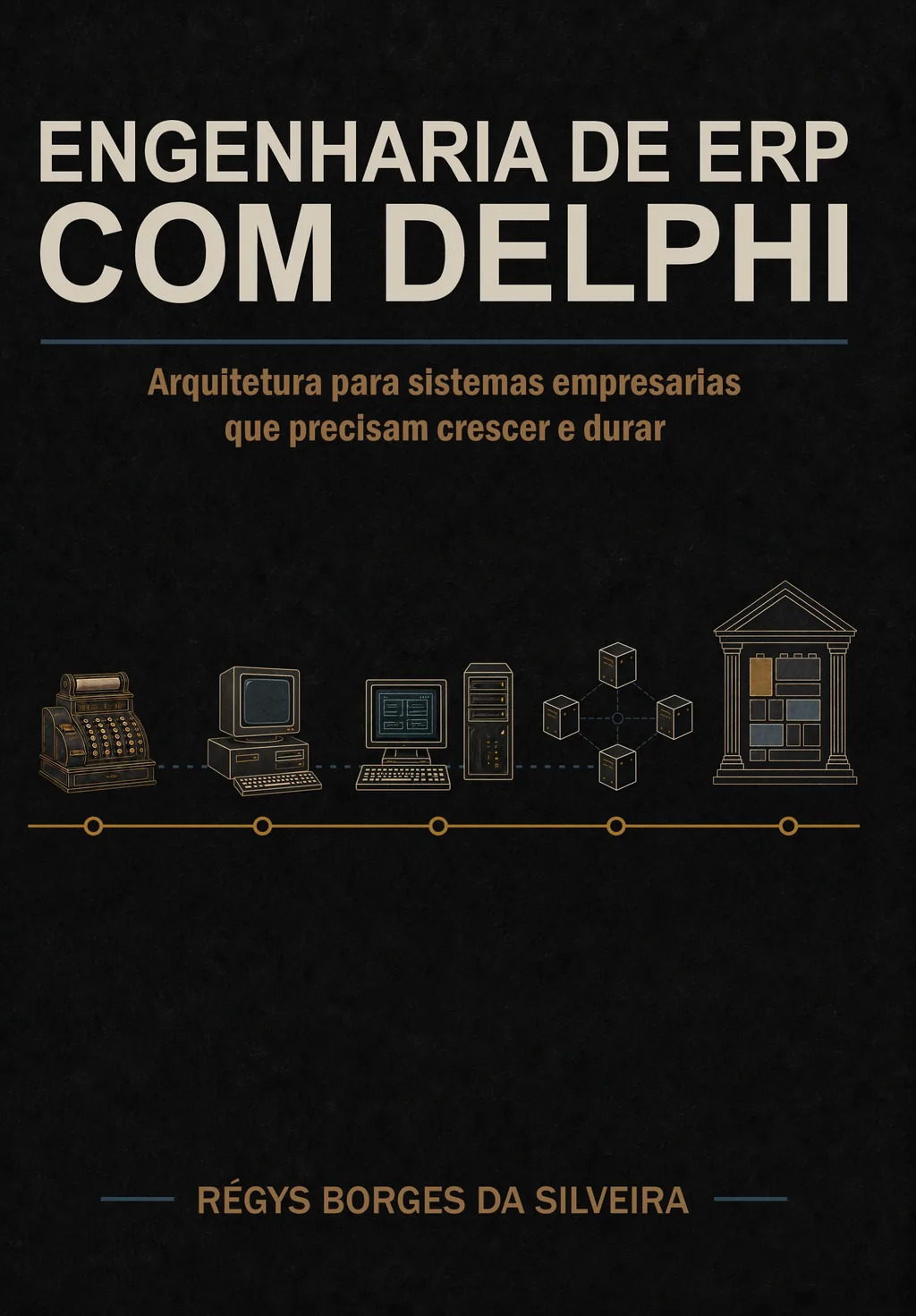
ERP Engineering with Delphi
Build and evolve Delphi ERPs without losing consistency, traceability, or recoverability.
Explore →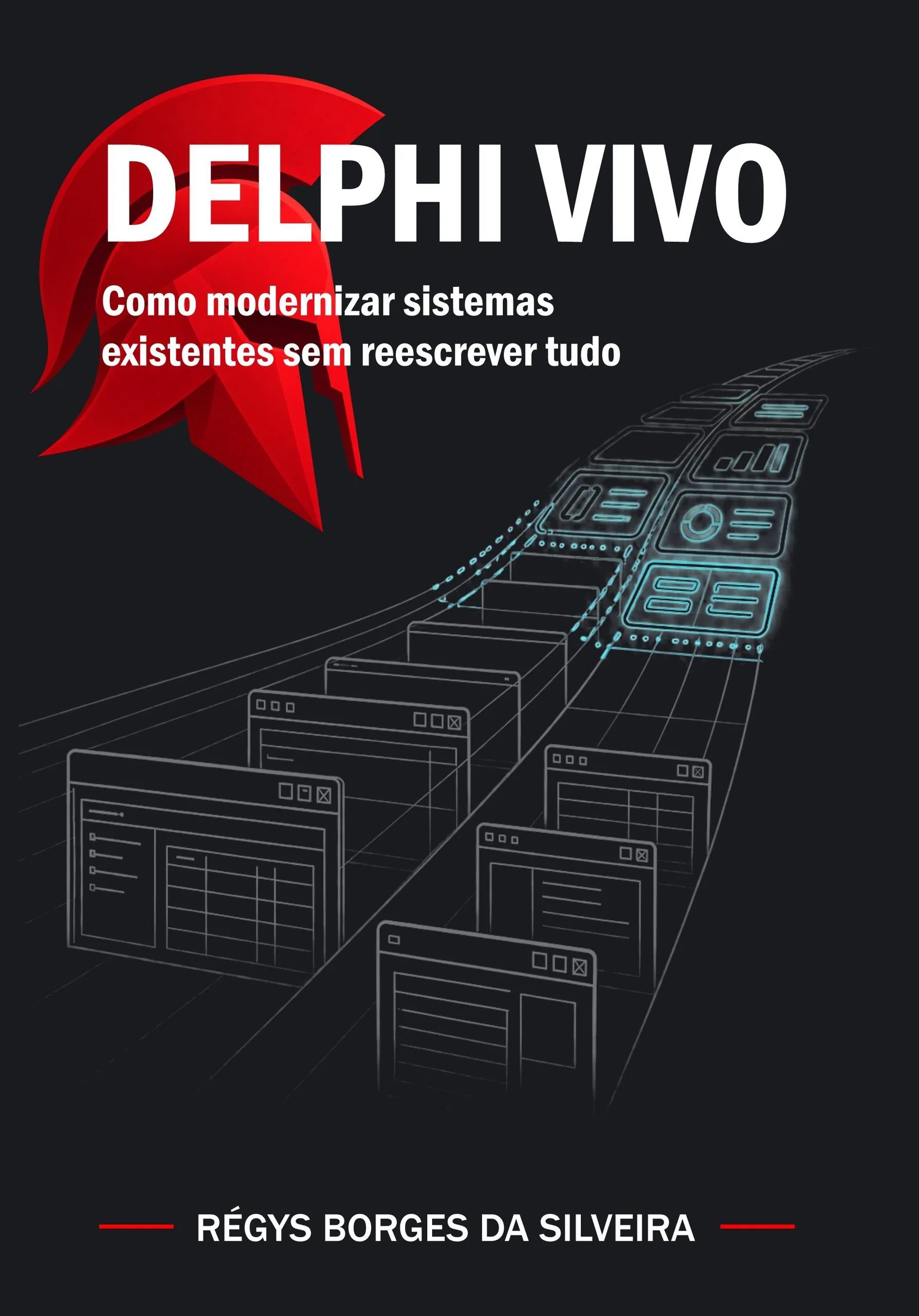
Software Engineering
Delphi Alive
Restore your ability to evolve Delphi systems through small, verifiable, and reversible changes.
Explore →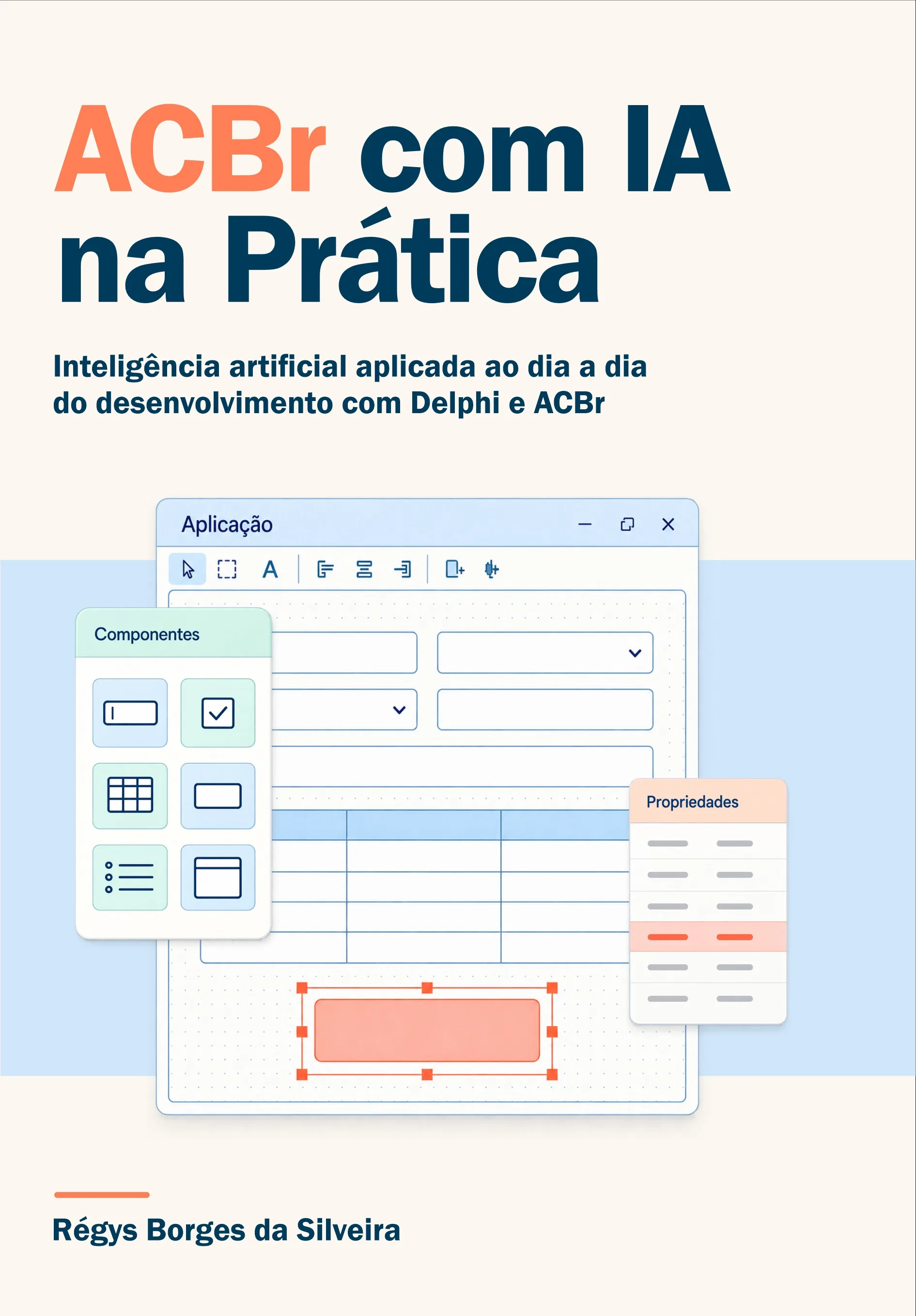
Delphi & ACBr
ACBr with AI in Practice
Turn AI responses into Delphi solutions you understand, test, and maintain.
Explore →