 Régys Borges da SilveiraBooks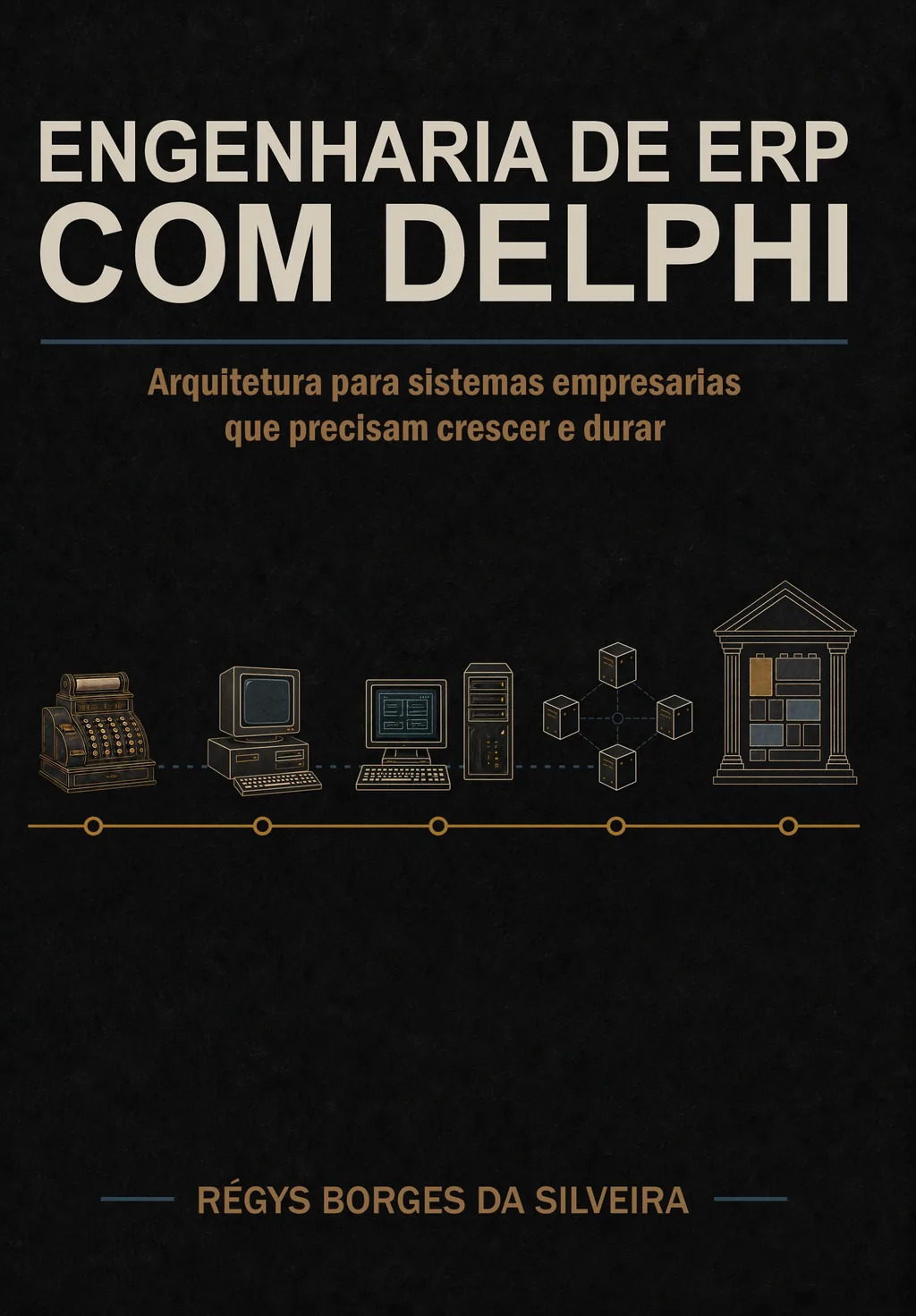
Delphi & ERP Engineering
An ERP is not a large CRUD application.
ERP Engineering with Delphi
Architecture for business systems that need to grow and last
Build and evolve Delphi ERPs without losing consistency, traceability, or recoverability.
Notify me when it is available
This book is being prepared in Brazilian Portuguese.
About the book
A complete view of the book.
ERP Engineering with Delphi treats business software as a network of rules, movements, history, and responsibilities—not as a collection of screens and CRUD operations. Using the Atlas ERP as a practical laboratory, it explains how to organize domains and modules while keeping the system understandable and recoverable.
Across five parts, the book connects FireDAC persistence, transactions, concurrency, idempotency, inventory, finance, taxation, integrations, security, observability, migrations, tests, and resilience. Each pattern appears in response to a concrete pressure, making its benefits, costs, limits, and alternatives visible.
The challenge
Does this situation sound familiar?
When rules spread across forms, queries, and events, an apparently simple change can affect sales, inventory, finance, taxation, and auditing. The challenge is no longer creating screens; it is preserving the meaning of each operation.
The book’s approach
Preserve business meaning while the ERP evolves.
Learn to think in domains, invariants, movements, history, and processes; begin with a modular monolith and adopt distribution, asynchrony, and new patterns only when concrete pressure justifies their cost.
“Suitable architecture grows from problems and their trade-offs, not from adopting patterns in advance.”
By the end of the book, you will be able to:
✓Define modules and responsibilities without circular dependencies
✓Preserve rules, invariants, movements, and history
✓Control transactions, concurrency, and retries with idempotency
✓Design inventory, finance, and taxation as connected domains
✓Integrate services, jobs, and events with security and observability
✓Evolve databases, tests, and architecture proportionally and resiliently
Questions that guide the reading
Answers begin with the right questions.
Questions explored through context, criteria, and examples.
How can consistency be preserved when a sale crosses several domains?
When do queues, events, or services justify the cost of distribution?
How can database and architecture evolve without losing traceability and recovery?
Inside the book
A structured journey that helps you move forward.
Concepts and applications presented in a coherent sequence.
ERP mindset and architecture
Move beyond the idea of an enlarged CRUD and define domains, modules, and boundaries from actual product pressures.
Consistency and persistence
Use FireDAC, units of work, rules, history, transactions, and isolation to protect system invariants.
Business domains
Apply the principles to inventory, finance, taxation, queries, and reports without dissolving responsibilities.
Integrations and processing
Model external dependencies, events, queues, jobs, and asynchronous processing with explicit guarantees.
Security and operations
Protect authorization and auditing, build observability, and preserve explanations after failures and retries.
Evolution and resilience
Guide migrations, tests, resilience, and architectural growth without adopting complexity before it is needed.
Content in preparation
Planned book structure
Explore the 5 parts and 17 planned chapters. Titles may be refined during editorial review.
View chapters17 chapters
Part I — Thinking like an ERP engineer
- An ERP is not a large CRUD application
- Architecture for systems that need to last
- Domains, modules, and boundaries
Part II — The core of consistency
- Persistence without illusion: FireDAC and responsibility boundaries
- Rules and invariants: where business meaning lives
- State, movements, history, and time
- Transactions, concurrency, and idempotency
- Multiple companies, branches, and configuration
Part III — Business domains
- Inventory
- Finance
- Taxation
- Queries, reports, and performance
Part IV — The connected ERP
- Integrations
- Events, queues, and jobs
- Security, authorization, auditing, and observability
Part V — Building to last
- Database, migrations, and distributed evolution
- Resilience, testability, and evolution
What makes this book different
Depth to understand. Clarity to keep moving forward.
Atlas ERP as a conceptual, compilable, and tested laboratory
Real problems presented before the patterns that may solve them
A modular monolith as a sustainable starting point
Trade-offs, limits, and alternatives accompanying each architectural decision
Who this book is for
Find your place in this book.
Delphi developers, software-house professionals, and technical leaders responsible for business systems.
✓ Software-house professionals building Delphi ERPs✓ Independent developers professionalizing business systems✓ Maintainers of products with growing rules and integrations✓ Architects, technical leaders, and development managers
Before you begin
What you need to benefit from the book
✓Intermediate Delphi and Object Pascal
✓Object orientation, SQL, and relational database fundamentals
An informed choice
This may not be the right book if…
—Readers seeking an introductory Delphi or CRUD course
—Readers expecting a ready-made commercial ERP or a universal architecture
Beyond this book
More reading. New conversations.
Explore the free guide collection and follow the books on Instagram, at your own pace.
Free guidesNo registration



One question.
A place to start reading.
123 free guides across nine pathways on rights, money, technology and public life: short reads with examples and sources to explore.
Choose a guide
Read online or download a free PDF. Guides are in Portuguese.
Books on Instagram
@livrosregysBooks by Régys


Between reads,
the ideas keep coming.
Thought-provoking excerpts, book news and a look behind what I am preparing. Discover your next idea there.
Explore the Instagram profile
@livrosregys · Opens a new tab. Posts are in Portuguese.
Upcoming release
Receive resources and updates about ERP Engineering with Delphi.
Sign up for content, samples, and new resources related to the book.
Upcoming release
ERP Engineering with Delphi is coming soon.
Official links will be published as soon as the editions are available.
Keep reading
Other books for your journey
Software Engineering
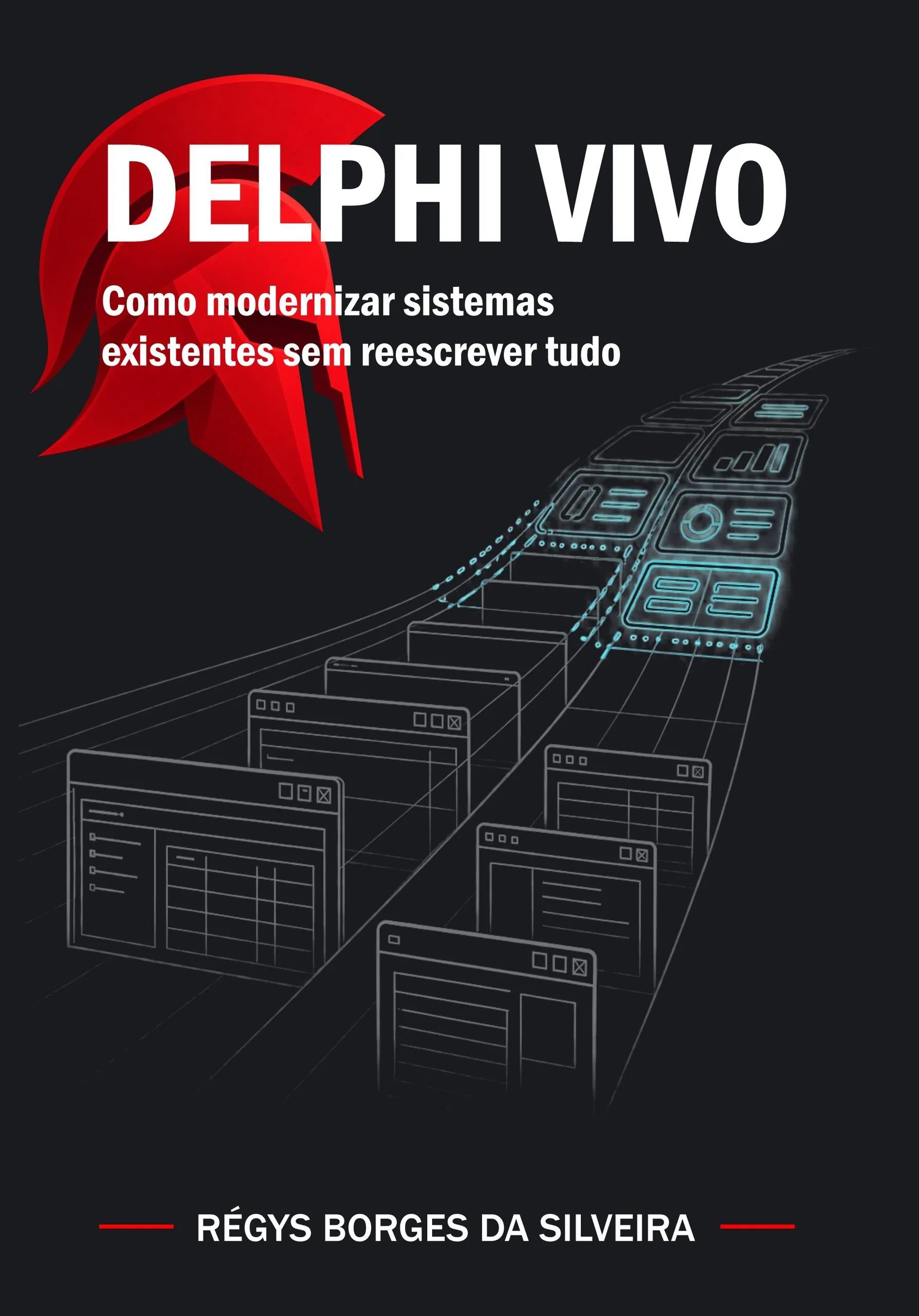
Delphi Alive
Restore your ability to evolve Delphi systems through small, verifiable, and reversible changes.
Explore →
Delphi & Databases
FireDAC in Practice
Move beyond the first connection and build a predictable, secure data-access layer ready for production.
Explore →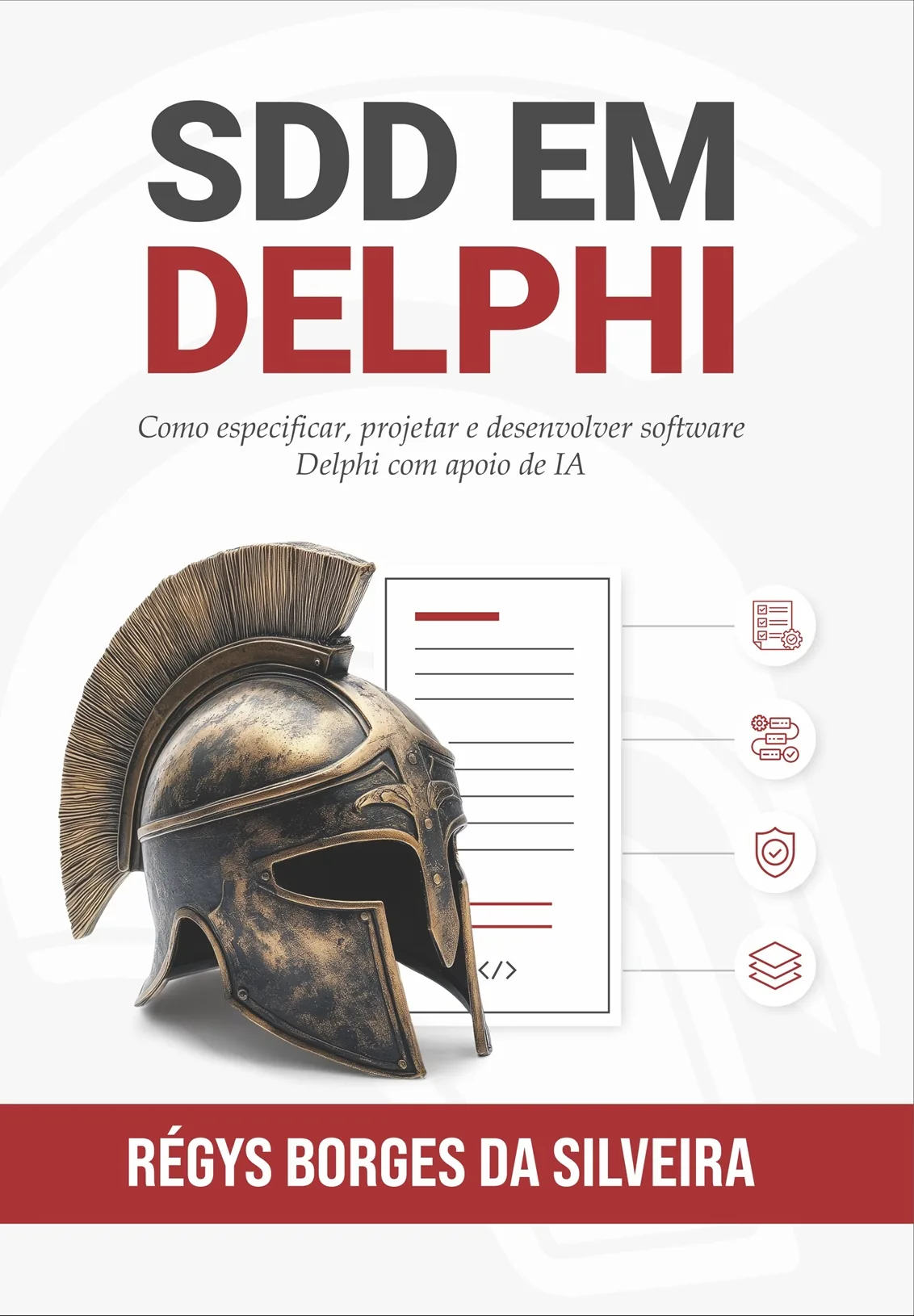
Delphi and AI
SDD in Delphi
Put specifications at the center and use AI with greater clarity, control, and technical quality.
Explore →