 Régys Borges da SilveiraBooks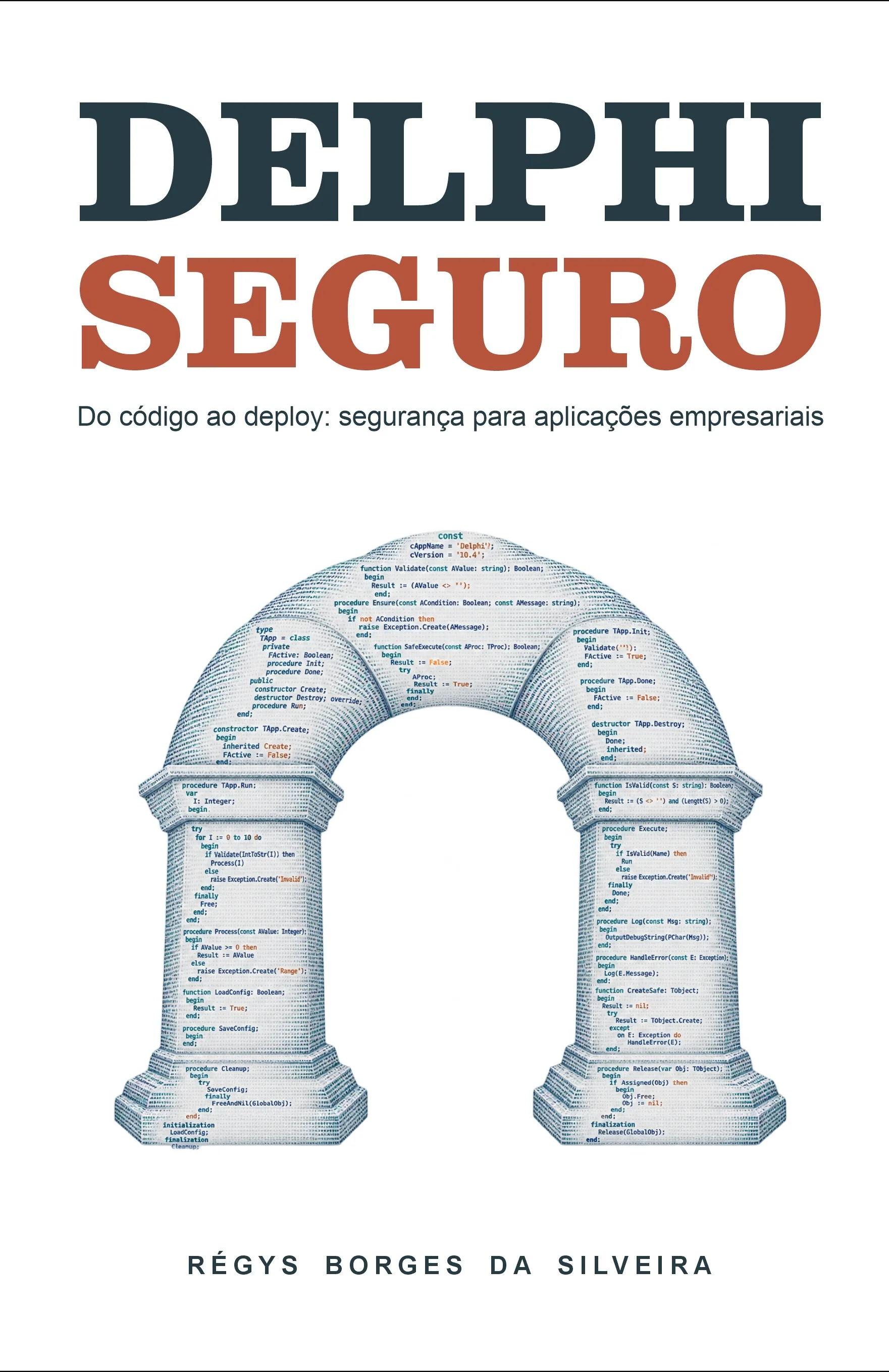
Delphi & Security
Software that evolves. Security that lasts.
Secure Delphi
From code to deployment: security for enterprise applications
Turn risks into engineering decisions that can be tested, audited, and maintained throughout the software lifecycle.
Notify me when it is available
This book is being prepared in Brazilian Portuguese.
About the book
A complete view of the book.
Secure Delphi treats enterprise application security as an ongoing engineering practice. It starts with problems familiar to Delphi developers and maintainers: credentials shipped inside executables, database access, integrations, sensitive data, and dependencies that must keep working.
The planned journey spans five parts and 18 chapters, connecting threat modeling, secrets and data protection, authentication, authorization, APIs, and local files. It continues through component inventories, SBOMs, pipelines, signing, and secure updates, then addresses logging, auditing, incident response, and privacy. Delphi examples, pitfalls, and verification criteria help readers plan changes suited to their application.
The challenge
Does this situation sound familiar?
A password inside an executable, an API without access control, or an unchecked update can expose data and disrupt operations. In Delphi systems with legacy code, integrations, and business constraints, how do you identify risks and decide what to protect first?
The book’s approach
Connect architecture, code, and operations to reduce risk.
The planned journey follows Delphi application security from threat modeling through delivery and operations. Each topic connects a control to the threat it mitigates, its operating conditions, and the remaining risk.
“Security is a responsibility throughout the life of the software.”
By the end of the book, you will be able to:
✓Map application assets, threats, and trust boundaries
✓Evaluate alternatives to passwords and tokens embedded in executables
✓Review database access and sensitive data protection
✓Distinguish authentication, authorization, and API protection
✓Plan dependency verification, signing, and software updates
✓Define evidence for logging, auditing, and incident response
Questions that guide the reading
Answers begin with the right questions.
Questions explored through context, criteria, and examples.
How can threats become engineering priorities?
How can you verify software and updates delivered to customers?
How can you record evidence without exposing secrets or personal data?
Inside the book
A structured journey that helps you move forward.
Concepts and applications presented in a coherent sequence.
Foundations and threats
Identify assets, attack surfaces, and trust boundaries before choosing controls.
Secrets and data
Examine credentials, secrets management, SQL injection, and sensitive information protection.
Identity and access
Connect authentication and authorization to permissions and session lifecycles.
APIs and local files
Evaluate integrations, input, configuration, and files controlled by the local environment.
Dependencies and delivery
Follow inventories, SBOMs, pipelines, executable signing, and update verification.
Operations and privacy
Connect secure logging, auditing, monitoring, incident response, and personal data handling.
Content in preparation
Planned book structure
Explore the 5 parts and 18 planned chapters. Titles may be refined during editorial review.
View chapters18 chapters
Part I — Foundations and threat modeling
- Is your Delphi software really secure?
- Threat modeling for Delphi applications
Part II — Secrets and data protection
- The problem with passwords inside executables
- Secure secrets management
- SQL injection and secure database access
- Protecting sensitive data
Part III — Identity and application security
- Secure authentication
- Authorization and access control
- Secure APIs with Delphi
- Local files are also an attack surface
Part IV — Dependencies, delivery, and secure updates
- Do you know what is inside your ERP?
- SBOMs for Delphi applications
- Secure pipelines
- Protecting the executable delivered to the customer
- Secure software updates
Part V — Secure operations and privacy
- Logging without leaking information
- Auditing, monitoring, and response
- Brazilian data protection law for Delphi developers
What makes this book different
Depth to understand. Clarity to keep moving forward.
Security followed from code to operations
The fictional SecureCompany ERP as a shared case
Delphi examples with assumptions, pitfalls, and verification criteria
An evidence-oriented checklist, glossary, and subject index
Who this book is for
Find your place in this book.
Developers and teams maintaining enterprise Delphi applications.
✓ Delphi developers building enterprise applications✓ Teams maintaining legacy systems✓ Architects and technical leads prioritizing security risks✓ Professionals connecting development, delivery, and operations
Before you begin
What you need to benefit from the book
✓Knowledge of Delphi and experience developing or maintaining applications
✓No prior security experience is required; concepts are introduced throughout the book
✓A laboratory environment with fictional data to explore the examples
An informed choice
This may not be the right book if…
—Readers looking for an introduction to Delphi programming
—Readers expecting a universal recipe or a guarantee of absolute security
Upcoming release
Receive resources and updates about Secure Delphi.
Sign up for content, samples, and new resources related to the book.
Upcoming release
Secure Delphi is coming soon.
Official links will be published as soon as the editions are available.
Keep reading
Other books for your journey
Software Engineering
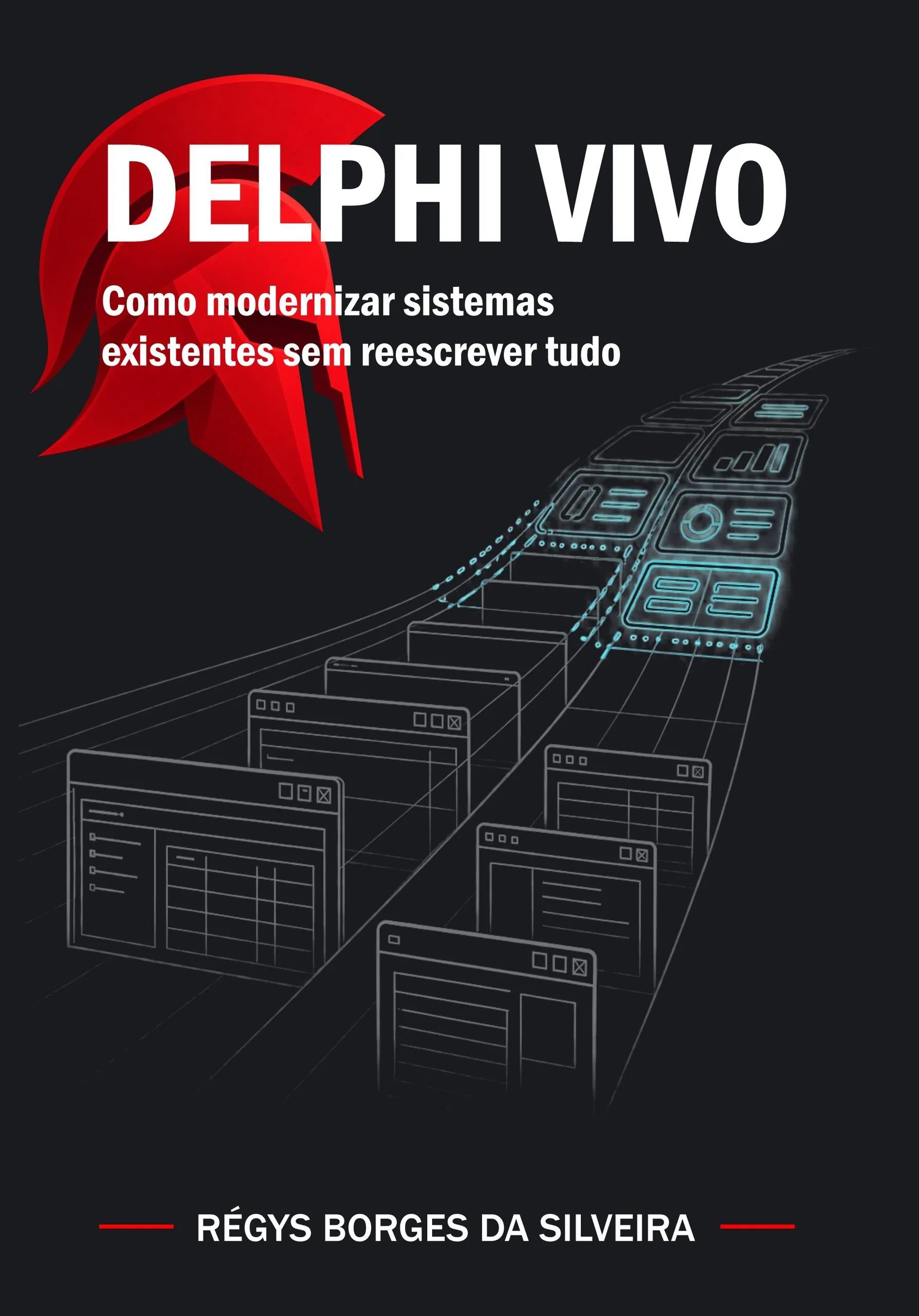
Delphi Alive
Restore your ability to evolve Delphi systems through small, verifiable, and reversible changes.
Explore →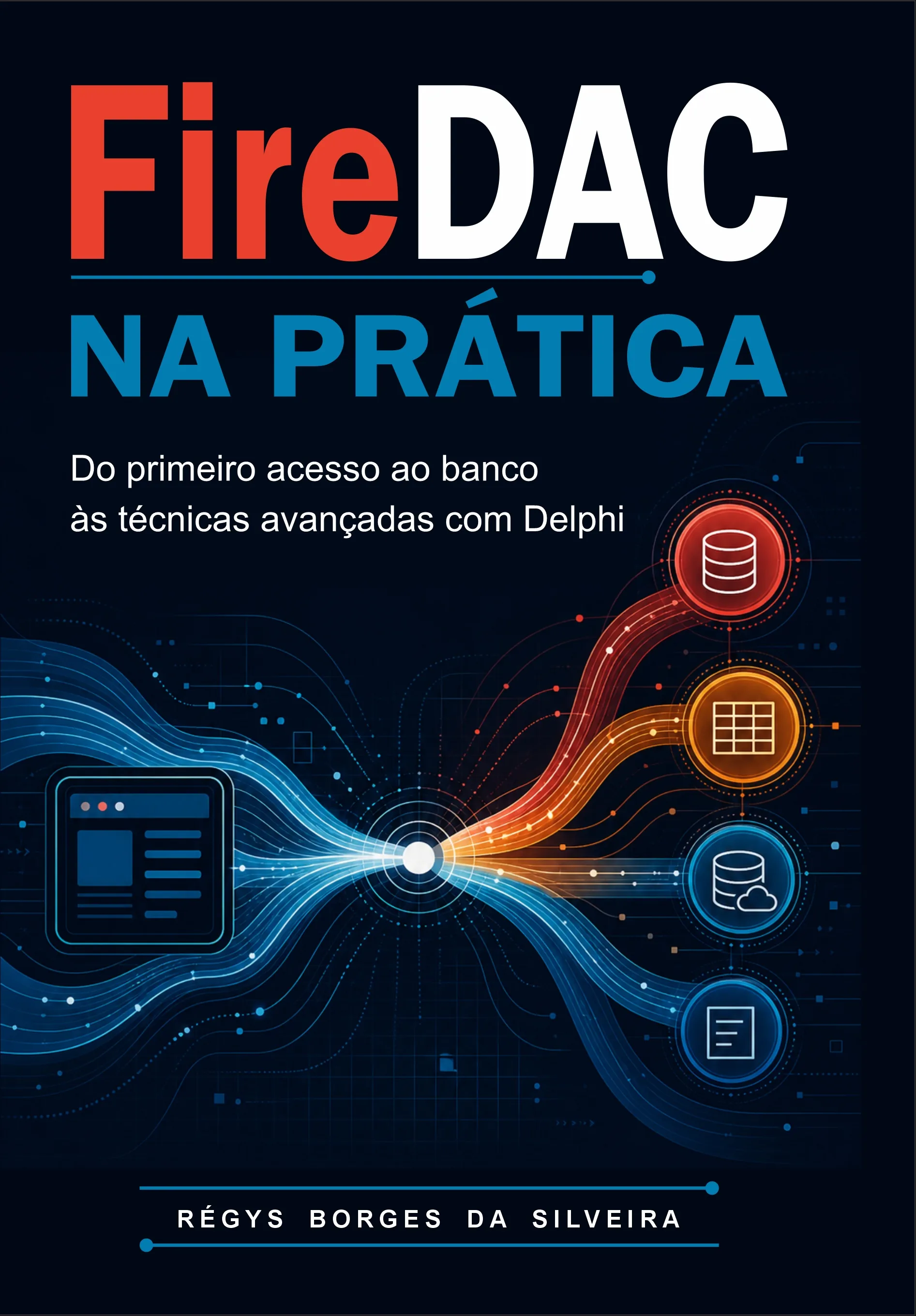
Delphi & Databases
FireDAC in Practice
Move beyond the first connection and build a predictable, secure data-access layer ready for production.
Explore →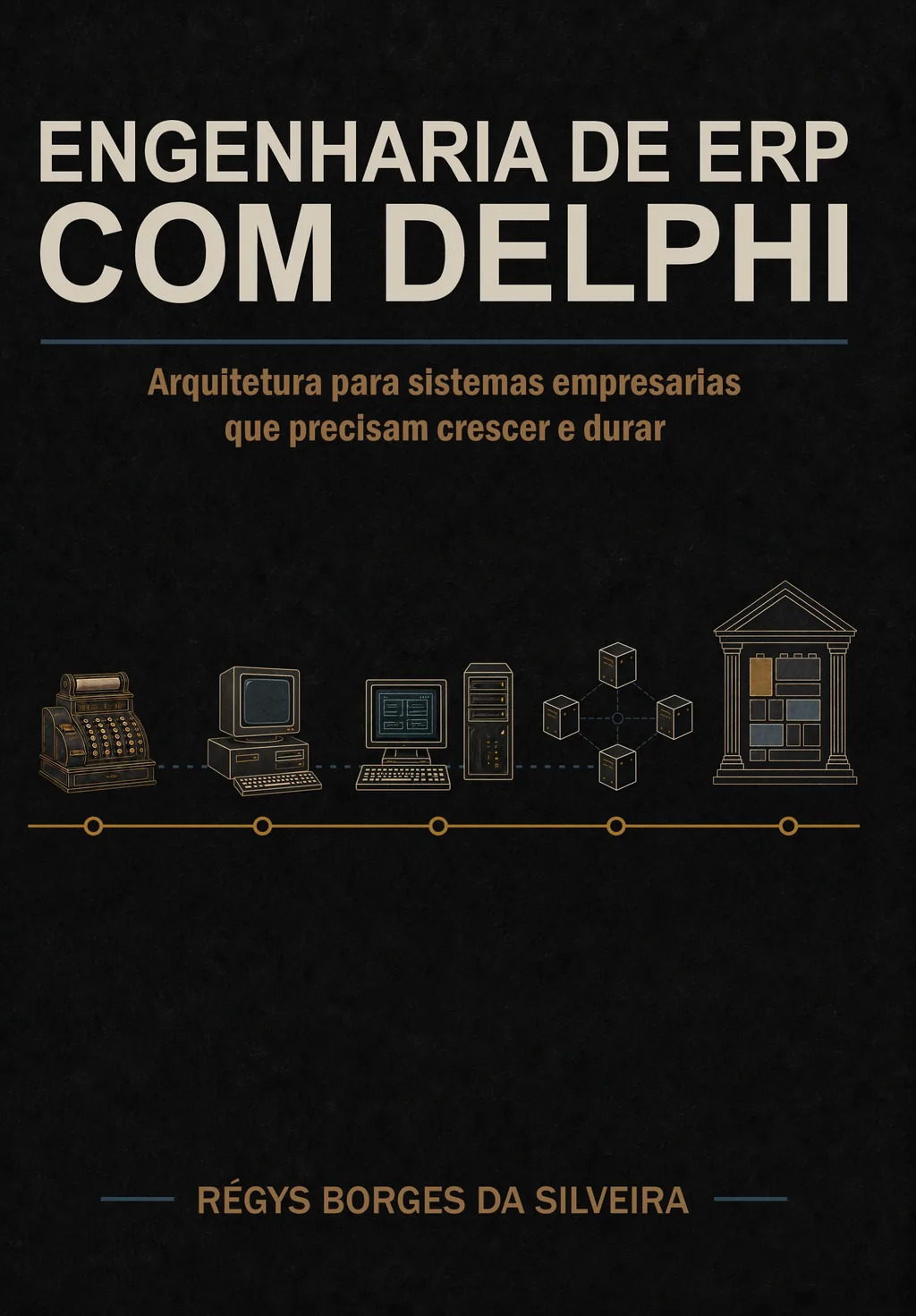
Delphi & ERP Engineering
ERP Engineering with Delphi
Build and evolve Delphi ERPs without losing consistency, traceability, or recoverability.
Explore →Instagram · @livrosregys
Follow on Instagram ↗The reading continues over there.
Follow Books de Régys for excerpts, new releases, and a look behind the books. The profile is in Portuguese.